
We’ve entered the edge-lord ad era.
Coinbase is out here dropping Weimar-core visuals like it’s 1923 and you just woke up in a Berlin cabaret on ketamine.
Meanwhile, Britain looks less like a post-Empire superpower and more like a deleted chapter from Oliver Twist — just with Deliveroo drivers and alarming crime stats. As the political pendulum swings back from corporate inclusivity toward sharper, more tribal identity plays, brands are getting bolder, stranger, and more reactionary.
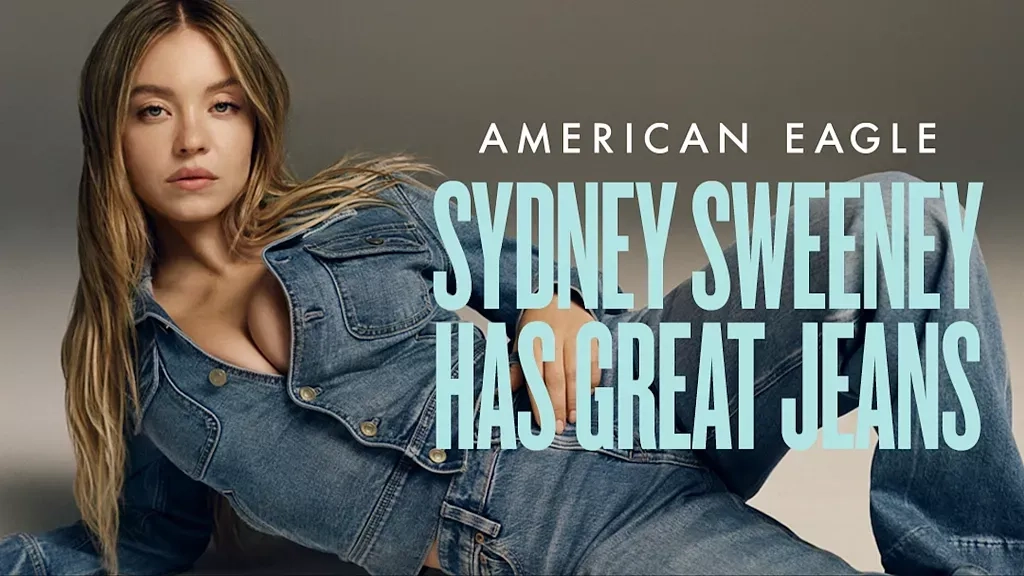
And somewhere in that chaos, American Eagle launched a campaign with Sidney Sweeney — a woman so photogenic, that in today’s outrage economy she’s basically a tactical nuke.
Gen Z’s Identity Crisis and the Targeting Trap
Brands entering the Gen Z arena aren’t just selling to a generation, they’re stepping into a fragmented battlefield of values, memes, and rapidly mutating political identities. The ground keeps shifting, often faster than marketers can keep up.
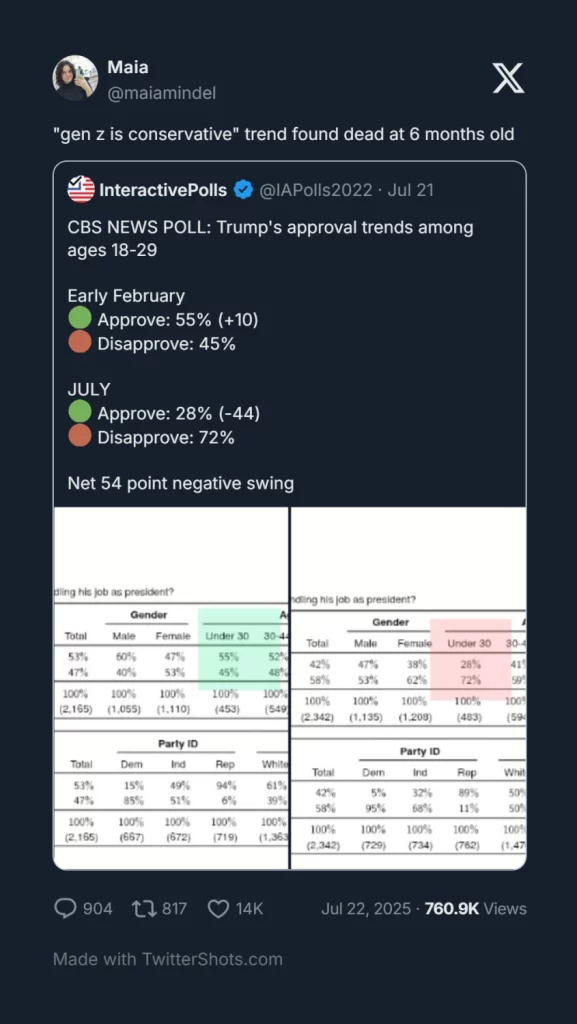
Take Donald Trump’s Gen Z approval collapse. According to YouGov polling cited on CBS News, support among Gen Z voters has plunged from around 55% in February to just 28% by July. For millennials, it’s even lower.
And the backlash isn’t all coming from the left.
Some argue that Gen Z conservatives are more hardline than Trump, and the shift reflects disillusionment with him not being right-wing enough. The discourse is no longer just “too red” or “too blue” — it’s “not the right shade of either.”
That’s a branding nightmare.
Gen Z is not a monolith — and that’s exactly the problem for brands trying to speak to them. A generation raised on economic instability, climate politics, algorithmic identity, and endless side hustles isn’t looking for cookie-cutter messaging.
They’re skeptical, ideologically split, and deeply online.
So when American Eagle launched a campaign with Sidney Sweeney — a very traditional beauty archetype — they touched a live wire. Some critics interpreted it as a return to exclusivity and coded conservatism. Her initials fed the meme machine inviting comparisons no brand strives for.
The point is this: in a generation where one half is worried about rent and the other is organizing meme-based culture wars, every campaign becomes a Rorschach test.
Try to appeal to everyone, and you’ll satisfy no one.
The Thin Illusion: Exclusivity as Brand Identity
Walk into a Brandy Melville store and it’s like stepping into a live-feed of someone else’s Instagram. The lighting is soft, the playlists are handpicked, and the staff — young, slender, and effortlessly cool — aren’t just there to fold shirts.
They are the marketing.
In many locations, store employees double as unofficial brand models. Their selfies end up on the official Brandy Melville Instagram or TikTok. Their outfits become lookbooks. You’re not just shopping the vibe — you’re being silently measured against it.
And then it hits you: every single piece of clothing on the racks is labelled One Size.
One-size skirts, one-size tees, one-size jeans.
Except it’s not really one size.
It’s the size — the “It Girl” size.
The message is clear: if the clothes don’t fit, the store wasn’t meant for you. It’s not even framed as exclusion — it’s aesthetic curation. And business-wise? It works. Streamlined production, lower SKUs, and cult-like loyalty from the exact demographic they’re targeting.
For Brandy Melville, exclusion is strategy.
But this model isn’t new. In the early 2000s, Abercrombie & Fitch walked a similar line — only louder.
Back then, A&F was the blueprint for curated cool. You’d enter a store thick with cologne, pulsing with house music, and staffed with people who looked like they belonged in a Hollister ad. Shirtless male models greeted you at the door. Employees were ranked internally by “aesthetic,” and schedules were built accordingly. In a leaked handbook, the term “brand representatives” was used interchangeably with “store staff.”
Sound familiar?
And yet — insert irony here — Abercrombie was arguably more inclusive than Brandy Melville is today.
While A&F was undeniably selective and dicey in its messaging (and faced plenty of lawsuits because of it), the clothes came in multiple sizes. Sure, they catered to slender bodies, but you could still find an L or XL on the rack. Brandy Melville, by contrast, has made a business model out of not even pretending to include you.
Fast forward to the 2020s, and Abercrombie has undergone a dramatic rebrand.
The shirtless greeters are gone. The cologne is muted.
The aesthetic? Diversity-forward, body-positive, and aggressively inclusive. It’s admirable effort, but in chasing social redemption, Abercrombie lost something too: its edge.
It went from a cultural touchstone — aspirational, controversial, memorable — to just another middle-market retailer trying to keep up with TikTok trends.
And that’s the real tension here: for brands, exclusivity has always been a kind of currency. Inclusion may be the right thing to do — but exclusion sells fantasy.
It sells aspiration.
And in the era of micro-targeted identities, fantasy still converts.
Rip Curl, Representation, and the Definition No One Wants to Touch
Remember that time Rip Curl radically miscalculated?
A moment that didn’t make as many headlines as it should have, but landed like a sucker punch among brand loyalists.
For years, Bethany Hamilton had been a symbol of tenacity and grace under pressure. After surviving a brutal shark attack that cost her an arm, she returned not just to surfing, but to competitive surfing — an almost mythical comeback that elevated her to icon status within the sport.
She is, by any measure, a living embodiment of courage and athleticism.
So when Rip Curl — a brand long associated with grit, waves, and authenticity — unceremoniously dropped Hamilton as a brand ambassador, and shortly after announced a transgender surfer Sasha Jane Lowerson in the role, it sent shockwaves through their base.
There was no official statement that one replaced the other. But the timing made the optics unavoidable. For many, it looked like a replacement. A signal. And a pointed one at that.
Within days, social media campaigns flared—surfboards, wetsuits, and beach shorts burned in protest. The hashtag #BoycottRipCurl trended, and the brand swiftly deleted the Lowerson promo and issued an apology:
“Our recent post has landed us in the divisive space around transgender participation in competitive sport … we upset a lot of people … the surfer featured … has not replaced anyone on the Rip Curl team, and is not a sponsored athlete”
The backlash wasn’t just noise.
Longtime customers accused Rip Curl of abandoning substance for performance politics, choosing a headline over heritage. Online forums lit up. Reddit threads grew.
And under the surface, a deeper fracture was forming:
What defines a woman in sport?
It’s a question no brand wants to answer, but one they’re increasingly forced to dance around. Athletic performance, fairness, representation, and biology all tangled in a conversation that’s become a cultural landmine. And Rip Curl didn’t navigate it so much as step directly into it, leaving behind both a legend and a loyalty gap.
To critics, the move didn’t just feel performative — it felt transactional.
The fallout exploded beyond social media. KMD Brands, which owns Rip Curl, reported disastrous financials in the first half of FY2024: profits turned to losses, overall sales dropped 14.5%, and Rip Curl’s revenues fell 9.2% year-over-year, reflecting a broader “lack of connection with target consumers” highlighted in its investor presentation
In the chaos, Hamilton herself said little, but her continued presence in the surf world made one thing clear: she never needed a brand to validate her.
She’d already proven herself in the waves. But Rip Curl, once synonymous with authenticity and athlete-first ethos, was suddenly just another brand caught in a storm of its own making.
The overall monetary toll? Still unclear.
But if you measure in sentiment — in trust, respect, and lifetime value — it’s hard to argue the campaign came out ahead.
“Good Jeans” and Bad Optics: American Eagle’s Gamble with Nostalgia
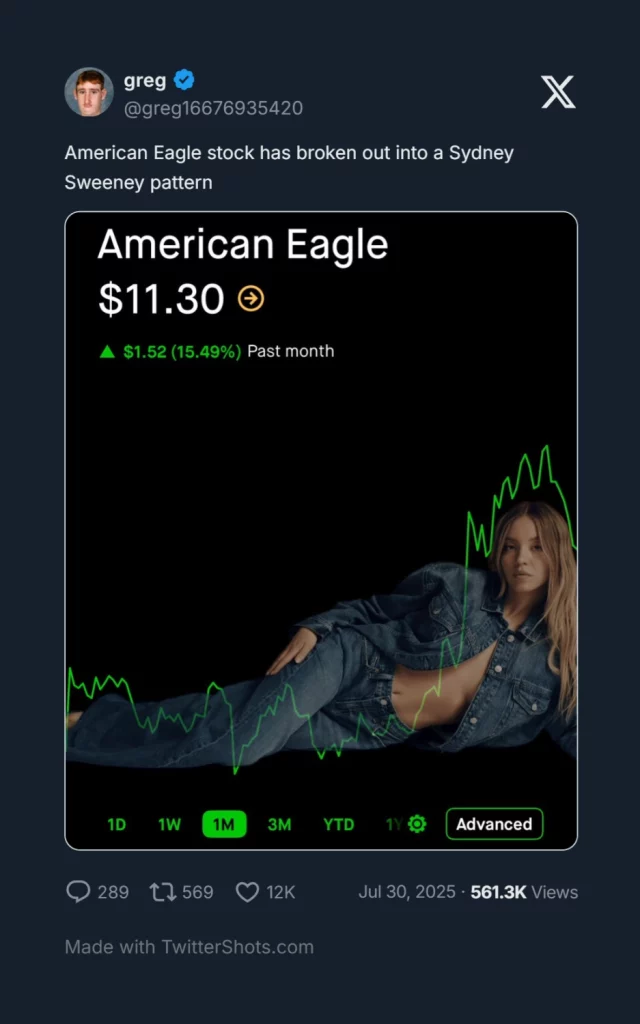
If Brandy Melville is exclusivity by design and Abercrombie is redemption by rebrand, then American Eagle is doing something different entirely: testing how much edge the market will tolerate.
When AE launched its latest campaign featuring Euphoria actress Sidney Sweeney, the initial reaction was predictable fanfare: she’s blonde, beautiful, and internet-canonized.
But things quickly turned.
The campaign tagline, “Good Jeans,” which was clearly intended as a breezy play on words, spiralled into controversy. Online critics began linking the phrase to eugenics, calling it a not-so-subtle dog whistle. The allusion may have been a stretch, but in an era of algorithmic outrage, nuance dies fast.
Others pointed out that Sidney Sweeney’s initials — SS — didn’t exactly help cool the temperature.
That was enough to light the match.
Suddenly the campaign wasn’t just a denim ad — it was a culture war flashpoint.
What followed was not the typical PR scramble. American Eagle didn’t apologize. They didn’t backpedal. They doubled down. The campaign stayed live. The TikToks kept running. And Sweeney?
She didn’t comment, she posted photos in the jeans.
This wasn’t a mistake. It was a test.
American Eagle is doing what Abercrombie did in the early 2000s — but with 2020s playbook analytics. They’re not just selling jeans. They’re floating a trial balloon to see whether exclusivity, aesthetic tribalism, and a faint whiff of controversy actually boost margins in a crowded retail space.
Because here’s the thing: a huge portion of AE’s audience remembers the Abercrombie heyday — not through the lens of body shaming or discrimination, but through nostalgia. The 2000s were pre-crash, pre-pandemic, pre-doomscroll. Life felt easier. The jeans fit better (or at least, you were 17). AE is tapping that emotional memory — but updating the formula with just enough plausible deniability to survive modern scrutiny.
They’re hedging.
This campaign isn’t about a full brand pivot, it’s a weather balloon.
They’re watching sentiment, tracking engagement, and — most importantly — waiting to see how the numbers move. If the margins improve, they’ll go all in. If they tank, they’ll quietly pretend this was all just a quirky Sweeney photoshoot and return to safe, inclusive marketing.
But the gamble is clear: exclusivity still sells — if you can wear it with a wink.
Creative Courage Cuts Both Ways: What Gen Z Really Wants
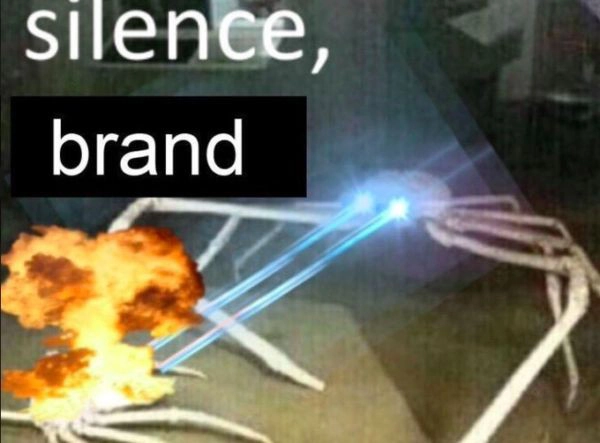
In the middle of the chaos — from canceled partnerships to boycotts and viral clapbacks — one thing stands out: Gen Z isn’t afraid of edge.
What they can’t stand is cowardice.
This generation doesn’t just want authenticity — they want boldness.
At the heart of every campaign meltdown — whether it’s Rip Curl’s silent shuffle, Abercrombie’s descent into mass-market neutrality, or American Eagle’s foray into curated controversy — is a fundamental misunderstanding: that identity itself can be stockpiled, segmented, and sold.
But Gen Z doesn’t view identity as something to be marketed to — they view it as something to express through. And if a brand becomes a bottleneck for that expression — too rigid, too performative, too obviously engineered — they’ll walk. Not just from the campaign, but from the store.
This generation grew up with fractured media, economic instability, and a hyper-politicized internet. Their BS radar is faster than any PR firm. They know when a brand is posturing for profit — and they know when a brand actually understands the culture it’s stepping into.
And yet, the impulse to over-engineer remains. Companies toggle between performative inclusivity and sudden hard pivots into aesthetic gatekeeping, hoping one will unlock the next wave of loyalty.
But here’s the rub: they want vision, not vibes.
Raised on TikTok and aesthetic micro-niches, Gen Z doesn’t just consume; they remix, dupe, parody, and rebuild culture daily. The quickest way to lose them?
Pandering without purpose.
They’re not scared of bold ideas. They’re not fragile.
They want coherence. Cohesion. Creative bravery.
And more than anything — they want to feel like they’re not being talked down to by a marketing team reading a social justice glossary.
So whether you’re a brand returning to 2000s exclusivity, launching a controversial partnership, or just trying to understand your market — the lesson is simple:
Identity isn’t inventory. It’s dialogue.
And Gen Z? They expect a real conversation.
The brands that get it will thrive. The ones that don’t? Scroll on.